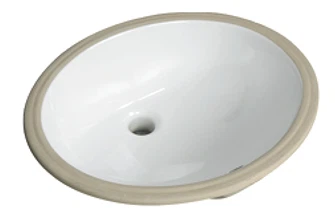
As a vital component of modern kitchens and bathrooms, undercounter basins' quality and installation compliance directly impact user experience and safety.To ensure product quality, installation process, and user rights, corresponding implementation standards have been established both domestically and internationally, covering multiple dimensions, including materials, dimensions, load-bearing capacity, installation, and testing. This article will analyze the core implementation standards for undercounter basins and explore their practical requirements.
Undercounter Basin Implementation Standard System
Undercounter basin implementation standards are typically established by national or industry authorities, such as China's national standards (GB), industry standards (QB/JC/T), and international standards (such as ISO and EN). In the Chinese market, undercounter basins primarily refer to the following standards:
1."Ceramic Disc Sealed Faucets" (GB/T 18145-2014): While this standard primarily addresses faucets, it also provides valuable guidance on supporting requirements for basin installation apertures, drain connections, and more.
2."Architectural Sanitary Ceramics - Sanitary Ware" (GB/T 6952-2015): Specifies key performance indicators for ceramic undercounter basins, including water absorption, crack resistance, and stain resistance.
3."General Technical Requirements for Kitchen and Bathroom Hardware Products" (QB/T 1334-2013): Covers the corrosion resistance, load-bearing capacity, and installation compatibility of undercounter basin hardware accessories (such as drains and brackets).
In addition, some high-end undercounter basins may also need to comply with international standards, such as Europe's EN 14688 (ceramic sanitary ware) or ANSI Z124.1 (American standard for plastic sanitary ware), to ensure export compliance. II. Analysis of Core Implementation Standards
6Material and Process Standards
Under-counter basins are primarily made of ceramic, artificial stone (acrylic, quartz), and stainless steel. Implementation standards for different materials have different emphases:
•Ceramic under-counter basins: Must meet requirements for water absorption ≤ 0.5% (GB/T 6952), thermal shock resistance (no cracking in alternating hot and cold tests), and surface abrasion resistance (Mohs hardness ≥ 3).
•Artificial stone under-counter basins: Must comply with JC/T 908-2013 (solid surface materials), requiring high-temperature resistance (no deformation at ≥ 100°C), impact resistance (no cracking), and stain resistance (easy to clean).
•Stainless steel under-counter basins: Must meet the 304 or 316 material standards of GB/T 3280 (cold-rolled stainless steel plate) and ensure corrosion resistance (no rust in a salt spray test for ≥ 24 hours).
Dimensions and Installation Standards
The installation method of an undercounter basin (overcounter, undercounter, or built-in) directly affects its dimensional specifications:
•Drilling Dimensions: The standard undercounter basin's drilling diameter is typically 380-450mm (single basin) or 750-900mm (double basin), with a tolerance of ±1.5mm (QB/T 1334).
•Installation Height: It is recommended that the countertop drilling edge be ≥20mm above the basin floor to ensure smooth drainage and easy cleaning.
•Load-Bearing Standard: Undercounter basins must withstand static loads of ≥15kg (e.g., heavy objects placed on them) and dynamic impacts (e.g., dropped dishes) without structural damage.
Safety and Performance Testing
Undercounter basins must undergo multiple rigorous tests, including:
•Durability Testing: Simulates 100,000 cycles of faucet opening and closing or 50,000 wipes with a cleaning cloth, with no surface wear or discoloration. •
Drainage Performance: Drain time ≤ 5 seconds (full water), no leakage (GB/T 26712-2011).
•Environmental Requirements: Formaldehyde emission ≤ 0.1 mg/m³ (artificial stone undercounter basin), heavy metal content complies with GB 18584 (Limits of Hazardous Substances in Interior Decoration Materials).
Practical Application Specifications for Implementation of Standards
1. Compliance in the Production Process
Manufacturers must strictly adhere to the standards in selecting raw materials and conduct pressure tests, hot and cold cycle tests, and load-bearing tests before shipment to ensure that products meet design requirements.
2. Standardization in the Installation Process
Installers should adhere to the following specifications:
•Pre-installation Inspection: Verify the compatibility of the countertop opening dimensions with the undercounter basin, and secure the edges with silicone sealant (compliant with GB/T 14683).
•Drainage System: The slope of the sewer pipe should be ≥1% to prevent blockage; install an odor-resistant elbow (complying with CJ/T 186-2018).
•Safety Reinforcement: Heavy undercounter basins (such as those made of marble) require metal brackets (load-bearing capacity ≥ 20kg).
3. User Maintenance and Standard Compliance
Users should regularly inspect the seal of undercounter basins (replace the silicone if it deteriorates) and avoid using strong acid or alkaline cleaners (comply with GB/T 9985-2000 Detergent Safety Standard).
Conclusion
The implementation standards for undercounter basins are crucial for ensuring product quality, installation safety, and user experience. Manufacturers, installers, and end users alike must fully understand and adhere to the relevant standards to ensure the long-term stability of their undercounter basins. In the future, with advances in materials science and testing technology, the standard system for undercounter basins will continue to be optimized, driving the industry towards higher quality.