What a square suite actually changes (and what it doesn't)
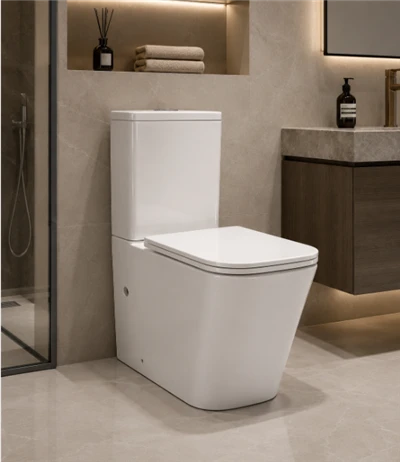
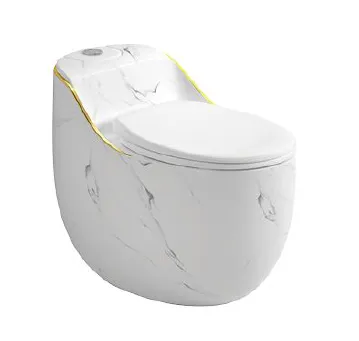
A square suite is defined by its angular body and clean lines - the look reads contemporary and pairs with square basins and tapware, which is why developers reach for it when every unit needs to feel current. Round suites carry a softer, more traditional weight and tend to project a little less into the room.
What the shape doesn't change is the plumbing. Both shapes connect the same way and use the same set-out logic, so swapping square for round rarely means re-doing the rough-in. That's worth knowing before anyone assumes square is the "harder" install - it usually isn't the shape that complicates a job.
Are square toilet suites harder to install?
Short answer: no - but the real trap catches round suites too. Australian fit-out guidance from the trade is blunt about it: close-coupled and back-to-wall suites look "standard" right up until you hit a set-out mismatch, and that's where installs go wrong. Force the pan to reach the waste and the collar twists or compresses unevenly, leaving you with a slow leak that stains the floor over months - or a faint sewer smell that never clears (source: Austpek Bathrooms install guide, 2026-03).
So the install question isn't square vs round. It's: does the suite's trap arrangement match your floor's waste outlet? On a 50-unit job, set-outs vary building to building and even floor to floor, so a suite with an adjustable trap saves you specifying two SKUs. Model 2061, for example, runs S-trap at 100/250 mm and P-trap at 180 mm, which absorbs most of the variation you'll meet on site.
square toilet suite, Model 2061
The part that decides the spec: WELS + WaterMark sign-off
This is where the square-vs-round debate quietly stops mattering. For a residential development, every toilet suite needs a confirmed WELS star rating before you lodge the BASIX certificate - and the rating you commit to has to match the product you actually install, because the certifier checks it at final inspection (source: CCC Engineering design memo, 2026-03).
There's a second trap. WaterMark (the safety approval) and WELS (the water-efficiency registration) are separate checks. A product with WaterMark but no current WELS registration cannot legally be supplied. Skip one and you're looking at site rework or fines - not a shape problem, a paperwork problem.
The practical takeaway for a buyer: choose by what you can prove, not by the bowl outline. Confirm both certifications on the actual model before you order in volume. A square suite that genuinely holds WELS 4-star (4.5L full / 3L half) and WaterMark - Model 2061 does both - clears that gate; a better-looking suite that can't show current registration doesn't.
"What's the point of a square toilet - and is it comfortable?"
Two questions buyers' downstream customers ask. The point of square is visual unity: in a modern apartment, a square suite lines up with square basins, mirrors and tapware so the whole bathroom looks deliberately designed rather than assembled from leftovers. That "matched" look is a selling point for off-the-plan units.
On comfort - and this matters for a project spec - comfort comes from the bowl interior and seat shape, not the outer square casing. The square refers to the external styling; inside, the bowl is shaped for normal use. The one number to actually check is projection (how far the suite sticks out from the wall), because that drives clearance in a tight ensuite. Model 2061 sits at 640 mm deep, which suits standard project bathrooms - so confirm it against your smallest floor plan rather than assuming square equals compact.
Are square toilet suites still in fashion for new builds?
For new and renovated apartments, yes - the trend in current Australian suites is a sharp, modern look paired with efficient flushing, and the move to WELS-rated dual flush at 4.5L full / 3L half is now the baseline rather than a feature (source: MyHomeware renovation trends, 2026-06). Square styling fits that brief cleanly. Round still has a place in budget builds and very traditional fit-outs, but if your project's selling point is "modern," square is the safer bet for resale appeal across units.
Square vs round: a project-buyer's quick comparison
|
Factor |
Square suite |
Round suite |
|
Look |
Contemporary; matches square basins/tapware |
Traditional, softer; common in older fit-outs |
|
Best fit |
Modern apartment & high-rise specs |
Budget builds, tight or traditional bathrooms |
|
Install |
Same set-out logic - match the trap to the waste |
Same - set-out, not shape, is the variable |
|
Compliance |
Identical requirement: confirm WELS + WaterMark |
Identical requirement: confirm WELS + WaterMark |
|
Resale appeal |
Stronger where "modern" is the pitch |
Neutral |
So which should you spec?
off-the-plan sales - a unified, current-looking bathroom. But make the call in this order: confirm the model holds current WELS + WaterMark, check the projection against your smallest bathroom, then confirm the trap matches your set-out. Shape is the last decision, not the first. Get those three right and square vs round becomes a styling preference - which is exactly where it should sit.
We build Model 2061 as the square option within our close coupled toilet suite range, WELS 4-star and WaterMark certified, with a 50-piece MOQ so you can trial it on one building before rolling it across a project.