Why retrofit replacement is a different buying problem to new builds

On a new build you specify the rough-in and the toilet together, so trap type is a free choice. On a retrofit the plumbing is already committed - older Australian homes run set-outs anywhere from under 100mm to over 200mm, while newer stock sits in a tighter 140–165mm band. (Source: bidetry.com.au; renovatingforprofit.com.au - background, dated 2023.) You are matching what is there, not choosing freely.
The common selection mistakes on retrofit jobs:
Buying on looks before checking the trap - a wall-faced pan is useless over a floor outlet.
Measuring to the edge of the waste pipe instead of the centre, or measuring off the skirting instead of the finished tile.
Assuming one trap configuration covers a mixed portfolio of jobs - it doesn't, and the mismatch shows up as a return.
Selection logic: how to spec the 2005 for a retrofit
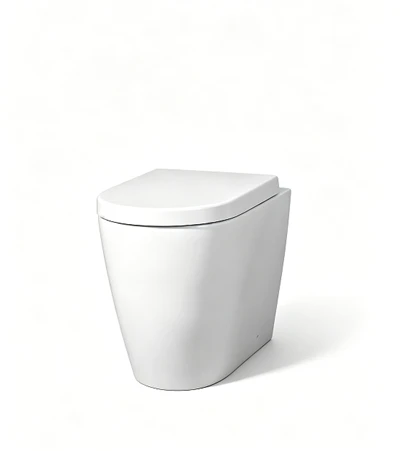
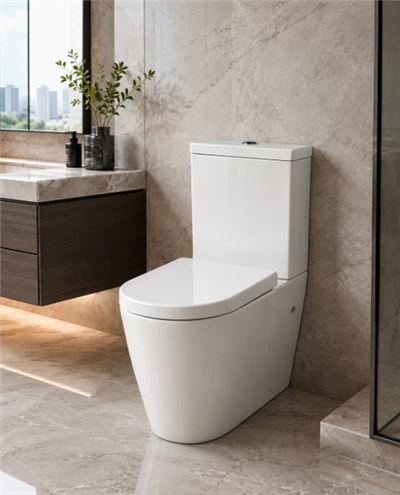
The WELS 4-star close coupled toilet (Model 2005) is built around the retrofit problem: one model, available in S-trap (250mm set-out) and P-trap (180mm set-out), both WaterMark certified. The selection sequence on site is simple:
Pull the old pan and read the outlet: down through the floor = S-trap; out through the wall = P-trap.
Measure the set-out to the centre of the pipe, from the finished tile face.
Order the matching configuration of the 2005 to that number - S-trap to 250mm, P-trap to 180mm.
Check projection: the 2005 is 660mm deep, a standard-projection suite. Confirm the room takes it before committing on a tight powder room.
For a distributor or contractor buying ahead, the dual configuration means you split one order across S and P to your actual job mix instead of carrying two separate models - fewer SKUs, more bathrooms covered.
Recommended product combination for retrofit jobs
A practical retrofit kit a contractor or maintenance buyer can standardise on:
|
Item |
Why it suits a retrofit |
|
2005 S-trap (250mm set-out) |
Covers floor-outlet bathrooms common in older and ground-floor Australian homes. |
|
2005 P-trap (180mm set-out) |
Covers wall-outlet bathrooms common in apartments, slab construction and newer builds. |
|
Dual-flush washdown, WELS 4-star |
Standard serviceable parts; no proprietary in-wall frame to source for warranty years later. |
|
WaterMark certified |
Passes plumbing inspection; required before a licensed plumber will install. |
What the wrong configuration costs your client

This is the figure that makes set-out matching a purchasing decision, not just a site detail:
Like-for-like swap: about 1–2 hours for a licensed plumber.
Wrong outlet / moved waste: install labour up 30–40%.
Full trap conversion (core the slab or open the wall and re-run waste): roughly $800–$2,000 by access.
Set-out mismatch causes more failed toilet swaps than any other spec - and on a bulk order a mismatch is a freight-back return on a fragile ceramic unit, not just a delay. Matching at the order stage is the cheapest insurance there is.
FAQ
Q: How do I know which trap configuration to order for a retrofit?
A: Pull the existing pan and look at the outlet: down through the floor is an S-trap; out through the wall is a P-trap. Measure the set-out to the centre of the pipe from the finished tile, then order the matching 2005 - S-trap for 250mm, P-trap for 180mm.
Q: Can one model really cover both floor and wall outlets?
A: The 2005 is produced in both an S-trap and a P-trap configuration, so a single model line covers both outlet types. You order the configuration that matches each job rather than carrying two separate products.
Q: Will the 2005 fit a tight retrofit bathroom?
A: It is a standard-projection suite at 660mm deep - not a compact pan. It suits most retrofit bathrooms, but on a very small powder room confirm the depth against the available floor space before ordering.
Q: Is it compliant for Australian retrofit installation?
A: Yes. The 2005 is WELS 4-star and WaterMark certified, which a licensed plumber checks before installing. Both the S-trap and P-trap configurations carry the same certifications.