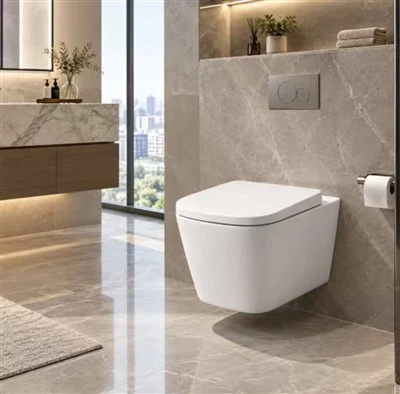
As an essential component of modern sanitary facilities, the molding process used for portable toilets directly impacts their durability, comfort, and user experience. Currently, mainstream portable toilet molding processes include injection molding, die casting, and assembly, each optimized for different material properties and functional requirements.
Injection molding is one of the most common processes used in portable toilet manufacturing, particularly for plastic toilet seats and shells. This process melts plastic pellets at high temperatures, injects them into a precisely designed mold, and cools them under high pressure to set the shape. The advantages of injection molding include high production efficiency, excellent product consistency, and the ability to create complex internal structures such as reinforcing ribs and drainage channels. However, this process requires extremely high mold precision, resulting in high initial mold development costs, making it suitable for large-scale production.
For ceramic portable toilets, die casting (also known as slip casting) is more common. This process involves injecting ceramic slurry into a plaster mold, where the slurry gradually solidifies and takes shape, leveraging the plaster's water-absorbing properties. Die casting ensures the density and strength of the toilet's main structure while facilitating a smooth, contoured exterior. The formed body undergoes subsequent treatments, such as drying and high-temperature sintering, to enhance its hardness and chemical resistance. While this process has the disadvantage of a long production cycle, the finished product offers high durability and aesthetics.
In addition to the main molding process, the assembly process of a mobile toilet is equally critical. For example, components such as the water tank, drain pipe, and seals require precise assembly to ensure functional reliability. Modern production processes often utilize automated assembly lines combined with quality inspection systems to reduce human error and improve overall yield. Furthermore, some high-end mobile toilets utilize composite materials or antimicrobial coatings to further enhance the user experience.
In summary, the molding process for a mobile toilet must be carefully selected based on the material type, functional requirements, and cost control. With advances in materials science and manufacturing technology, the molding process for future mobile toilets will become more efficient, environmentally friendly, and increasingly intelligent and personalized.