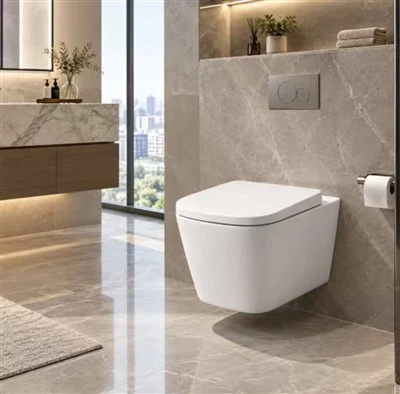
As a core component of modern sanitary facilities, the evolution of the toilet reflects humanity's continuously improving understanding of quality of life and public health. From early simple urinals to today's bathroom fixtures integrated with multiple intelligent features, toilet technology innovation has not only transformed people's daily experience but has also become a key indicator of living quality.
Traditional flush toilets rely on gravity to discharge waste, but this has long been a problem with water consumption. Modern water-saving products, through optimized tank structures and flushing system designs, reduce water consumption to 4 to 6 liters per flush while ensuring effective cleaning. Some high-end models even feature dual-flush modes, adjusting water distribution based on actual demand. This technological improvement can save households several tons of water annually, balancing environmental benefits with cost-effectiveness.
Improving comfort has been a key focus of recent toilet product upgrades. The ergonomically curved seat design conforms to the contours of the hips, and the adjustable temperature function effectively improves the winter user experience. The soft-close lid technology uses a damping mechanism to eliminate closing noise and prevent damage to the ceramic components caused by traditional hard-to-flush systems. Some products incorporate a foam shield protective layer, using a foaming agent to create a physical barrier that reduces stain adhesion and odor spread.
The trend toward smart toilets is driving toilets into a new stage of functional integration. Touchless sensor flushing systems automatically trigger waste disposal through infrared detection, preventing the risk of cross-infection. A built-in water filtration module removes impurities and softens the flushing water flow, while a pulse massage function promotes local blood circulation. Environmental sensing technology enables the device to automatically adjust the seat temperature based on room temperature, while a nighttime lighting system provides gentle guidance.
Industry data indicates that the global smart toilet market is growing at an annual rate of approximately 15%. Consumer demand for both health protection and ease of use continues to drive technological innovation. Future development will focus on the development of energy-efficient flushing systems, the application of microbial degradation technologies, and the improvement of aging-friendly features. Through the deep integration of materials science and the Internet of Things, we will further develop safe, efficient, and personalized bathroom solutions. These advancements not only reshape the functional form of the home but also demonstrate the value leap of essential consumer goods enabled by technology.