The Cost That Turns Up in Year Three
A toilet suite fails a landlord in one of two ways. The ceramic cracks, which is rare. Or a flush valve fails and nobody can source the part, which is not rare at all.
The second failure is the expensive one. A fifteen-minute cartridge swap becomes a full suite replacement, a second plumber's visit, a resident complaint, and a mismatched pan sitting next to the ones you fitted three years earlier. Multiply that across four hundred properties and the £3 you saved on the valve at tender stage is gone several times over.
Industry procurement reporting through 2026 shows owners increasingly favouring targeted bathroom refurbishment over full strip-outs, specifically to limit time out of use (industry source, 2026-04). Phased replacement makes the spares question sharper rather than softer: if you are changing pans in tranches across a stock, you are committing to a fitting you will have to buy again long after the tender is closed.
Void Property Bathroom Refurbishment: Where the Days Actually Go
In a void property bathroom refurbishment the toilet is rarely the critical path. Tiling and drying are. The toilet becomes the critical path on the day the set-out does not match and someone has to rework the soil connection with the property already booked for handover.
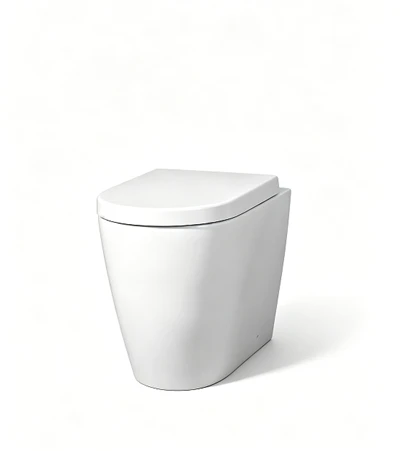
The FTZ-2403 runs a horizontal rear outlet at 180 mm minimum set-out, 102 mm spigot outside diameter, 160 mm floor fixing centres, 615 mm projection from the wall. There is no S-trap version, so if any part of your stock has a vertical outlet you need a second model, not a modification.
Specify the Valve, Not Just the Pan
Fill and flush valves on this model are specified per order. We will fit a European brand you nominate, where your direct labour organisation or your maintenance contractor already holds those spares.
This is the single change that most improves the ten-year cost of a bathroom programme, and it costs nothing at order stage. We would rather you name a valve your merchant will still stock in 2032 than accept our default because it saves a pound a unit. If your maintenance stores carry a particular make, say so at enquiry stage - after the moulds are running is too late to change what sits inside the cistern.
Why Close Coupled Toilet Suites for Social Housing Rather Than Concealed Cisterns
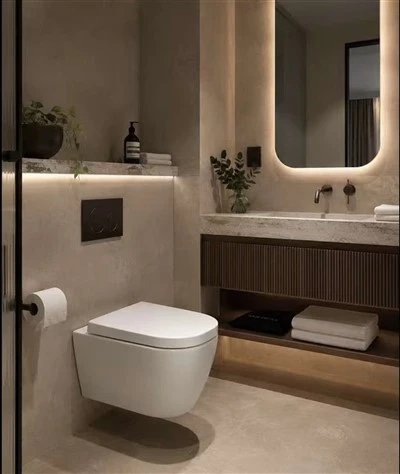
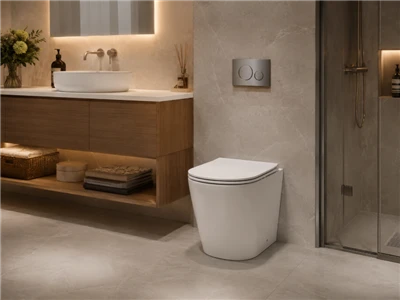
Concealed cistern systems look tidier and specify well on paper. They are a poor fit for tenanted stock for one reason: everything that fails is behind a wall.
When a fill valve goes on a concealed system, the repair needs access through a panel, and in a void that panel is often tiled over by a previous contractor who was not thinking about year six. The visit is longer, the operative needs to be the right trade, and if the frame is an obsolete model the whole assembly comes out.
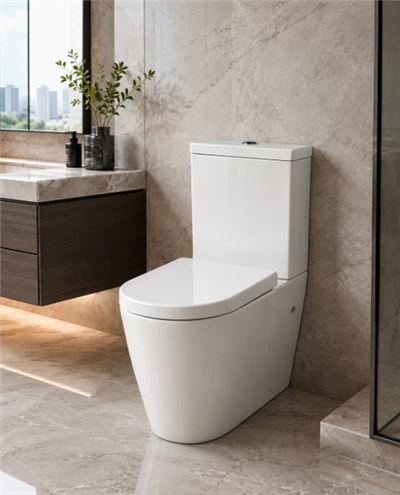
Close coupled toilet suites for social housing keep every serviceable part in front of the wall and reachable with a screwdriver. The cistern lid lifts, the valve swaps, the operative leaves. The trade-off is that you see the cistern, which matters in a show flat and does not matter in a re-let.
Low Maintenance Toilet for Rental Property: The Case for a Skirted Base
A low maintenance toilet for rental property is judged by whoever cleans it, not by whoever specified it.
The FTZ-2403 is fully back to wall with a skirted base. There is no exposed trap, no gap between pan and floor at the back, and no visible pipework. Under contract cleaning that means fewer surfaces where soil accumulates in places a cleaner cannot reach in the time allowed, and one less thing to argue about at a void inspection.
The cistern is 135 mm deep, which is what keeps total projection at 615 mm while still carrying a full 6 litre flush. In small flats and single-bathroom terraces that difference is the difference between a bathroom door that opens fully and one that does not.
Bulk Toilet Supply for Build to Rent: Phasing and Containers
Bulk toilet supply for build to rent runs on a different rhythm to a one-off development handover: tranches, not a single delivery, and a programme that shifts.
Minimum order is 20 pcs. Lead time is 35 to 45 days from deposit, which is the number to plan your tranche against, not the shipping time on top.
|
Container |
Sets |
Weight |
Payload spare |
|
20GP |
165–181 |
7.0–7.7 t |
~14 t |
|
40HQ |
380–418 |
16.1–17.8 t |
~8 t |
The container fills up before it weighs anything like its limit, so an operator buying basins, cisterns or bathroom furniture in the same programme has real payload spare to consolidate onto one booking rather than paying for two.
Breakage on shipped orders runs below 0.5%. Above that threshold we credit pro rata against the invoice or the following tranche, on photographs of the damage and carton markings sent within 14 days.
What to Put in Your Specification
Set-out: 180 mm minimum, horizontal rear outlet
Nominated fill and flush valve make, with a note that substitution requires written approval
Batch code retention: one unit per phase held in stores
Colour reference confirmed against a physical sample, not a screen
Tranche sizes and dates, so lead time can be planned rather than absorbed
Damage claim window and threshold agreed in the order, not after delivery
FAQ
Q: What is the minimum order for a trial tranche?
A: Twenty pieces. That is deliberately low so a landlord can test the set-out against the worst property in the stock before committing a phase. Trial units are charged at the standard rate and count towards the programme
Q: Can we specify our own flush valve?
A: Yes, and for a rental portfolio we would encourage it. Nominate a make your maintenance stores already hold and we will fit it, subject to confirming the cistern fit at enquiry stage. It affects unit cost and lead time slightly.
Q: Will a second tranche match the first?
A: The firing curve is adjustable and we hold the mould and glaze reference against your order, which is how repeat phases are matched. Retain one unit and the batch code from phase one and send us both before the reorder.
Q: How do we handle damaged units on arrival?
A: Photograph the damaged units and the carton markings and send them within 14 days of delivery. Anything above 0.5% of the tranche is credited pro rata, against that invoice or the next one.
Q: Are close coupled toilet suites for social housing worth specifying over a cheaper open-trap pan?
A: For tenanted stock, usually yes. The skirted base removes the cleaning complaint at void inspection and the close coupled cistern keeps the serviceable parts in front of the wall. On a one-off owner-occupier replacement the saving on an open-trap pan may well win.