In the production process of sanitary ceramics, especially in the molding and firing process, the most common problems are deformation and cracking. There are many factors contributing to product deformation and cracking, among which the unreasonable force distribution in the original design and manufacturing is an important one.
Due to the irregular shape of sanitary ceramic products and the multiple factors affecting product deformation and cracking, the force analysis in the green body design is relatively complex and difficult for most enterprises to master. However, some rules can still be applied.
The general rules are as follows:
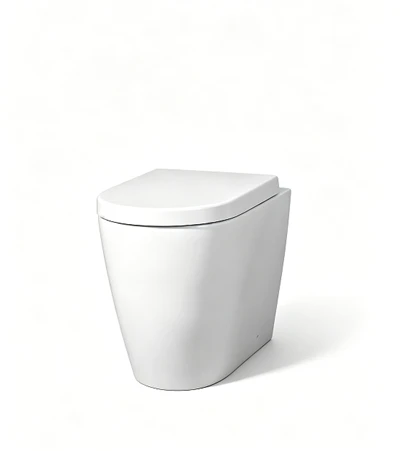
On the premise of meeting the shape and functional requirements, for the edge points and edge parts of the suspended parts, the closer the distance to the product's center of gravity, the better; and the lighter the mass of the edge parts, the better. For example, this principle should be observed for the front and rear ends of a toilet.
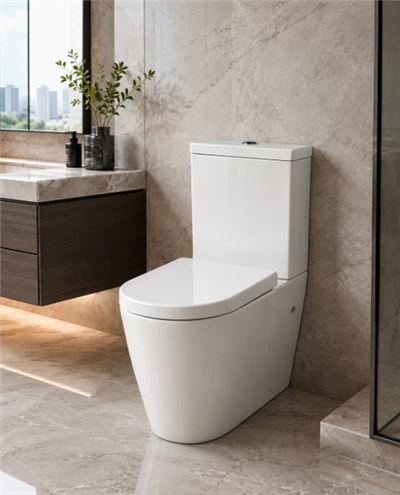
For the large flat parts of the product, try to decompose them into some concave-convex or wavy structures, such as the side of the water tank and the bottom plane of the water tank of a one-piece toilet.
Generally, reinforcing ribs should be considered for local parts that are prone to deformation and cracking.
For special parts with heavy load-bearing, the thickness of the green body can be appropriately increased and reinforcing ribs can be added.
The arch bridge principle can be applied in the design of some products.