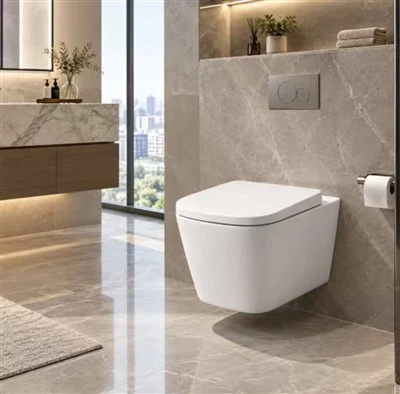
As a core component of modern sanitary facilities, the toilet's fundamental functions revolve around waste disposal, a clean experience, and maintaining public hygiene. While different toilet models may vary in design and additional features, their core functions are consistently structured around the following fundamental aspects.
Waste Collection and Discharge
The most fundamental function of a toilet is to efficiently collect and discharge human waste. Traditional toilets utilize built-in S- or P-shaped traps to achieve dual functions: First, the water seal within the trap prevents odor backflow, maintaining clean bathroom air; second, the unique piping structure utilizes gravity to direct waste and sewage into the building's drainage system. Modern toilets have further optimized the waste outlet diameter and internal streamlined design to reduce the risk of blockage and improve flushing efficiency.
Flush System Operation
The flushing function is the core guarantee of a toilet's cleanliness. Mainstream toilets utilize either siphonic or direct flush technology. Siphonic toilets use a rapid water flow from a reservoir to create a vacuum siphon effect, achieving thorough cleaning with minimal noise. Direct flush toilets rely on a large drop in water volume and the impact of the water flow to push waste directly, making them suitable for older drainage systems. Flush buttons or knobs typically feature single flush (standard flow) and dual flush (water-saving mode), allowing users to select different water volume options based on waste type, ensuring hygiene while conserving water resources.
Basic Cleaning Assistance Design
While modern basic toilets lack intelligent cleaning modules, they still utilize the following features to enhance the user experience:
1.Glaze Craftsmanship: The ceramic surface is fired at high temperatures to create a dense glaze. The smooth surface is both stain-resistant and easy to wipe.
2.Water Fittings: A high-quality inlet valve and float system precisely control the water level in the tank, ensuring a consistent water volume with each flush.
3.Seat Structure: The standard round or oval seat is ergonomic, with curved edges to reduce discomfort during use.
Public Health Protection Functions
A toilet's hygienic protection function is reflected in its effective control of cross-contamination:
•The water seal height of the trap (typically ≥5cm) creates a physical barrier, preventing sewer bacteria and pests from entering the room.
•Some basic models are equipped with a splash-proof foam device (optional). This pre-filled foaming liquid reduces the noise and risk of splashing when waste contacts contact.
•The removable tank cover and seat facilitate regular disinfection and, when used with specialized cleaning agents, maintain long-term hygiene.
While basic toilets lack intelligent features, they achieve the core goals of waste management, environmental hygiene, and health protection through rigorous engineering design and material science. Understanding these fundamental functional principles will help users select the appropriate model based on their specific needs. Proper use and maintenance can extend the product's lifespan and maintain the stable operation of their home hygiene system.