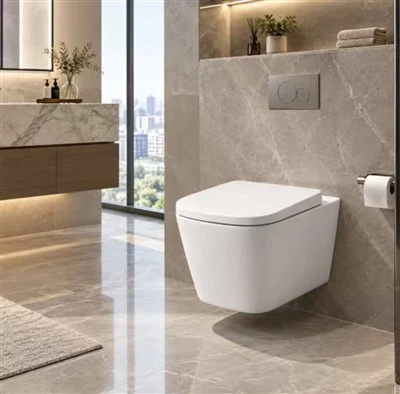
Mobile toilets are common sanitary facilities in modern life, widely used in homes, public places, and special environments. Their quality control is directly related to the user experience and health and safety, requiring strict management throughout the entire process, from raw material selection and production processes to finished product testing.
Raw material control is the foundation of quality. The main body of a mobile toilet is typically made of plastic or ceramic. Plastic components must be made of high-temperature and impact-resistant engineering plastics (such as PP or PE), and must undergo supplier qualification review and batch inspection to ensure compliance with environmental standards (such as lead-free and low volatility). For ceramic materials, attention must be paid to water absorption and glaze density to prevent leakage and stain adhesion. Rubber and metal components, such as seals and tank fittings, must be corrosion-resistant to prevent aging and failure from long-term use.
Standardized production processes are crucial. During the injection molding process, precise temperature and pressure control is required to prevent bubbles and deformation in plastic parts. Welding processes (such as connecting the tank to the base) must ensure a leak-proof seal, verified by airtightness testing. The firing temperature curve of ceramic toilets directly affects their strength and glaze quality. High-temperature, slow-firing processes, coupled with manual quality inspections, are required to eliminate cracks or color variations. Standardized assembly procedures, such as adjusting the sensitivity of the tank float valve and calibrating the angle of the drainage pipe, ensure stable flushing function.
A finished product inspection system ensures final quality. Each batch undergoes pressure testing (simulating full-load use), flushing performance testing (testing water flow rate and residual volume), load-bearing testing (verifying structural stability), and hygienic testing (such as assessing bacterial growth). Furthermore, material weather resistance is verified by simulating extreme environments (temperature swings from -20°C to 60°C, high humidity) to ensure product reliability in outdoor or temporary locations.
Quality control also extends to after-sales service, collecting user feedback on common faults (such as leaks and blockages) for continuous design optimization. Only by implementing strict quality control throughout the entire life cycle can we ensure that mobile toilets are functional, safe, and durable enough to meet the needs of diverse scenarios.