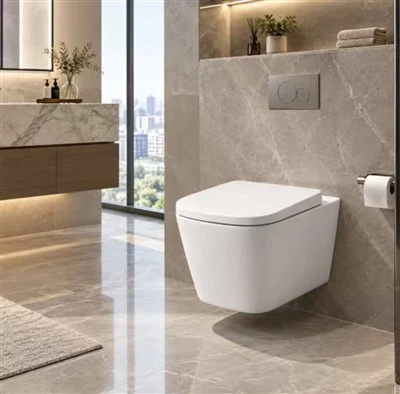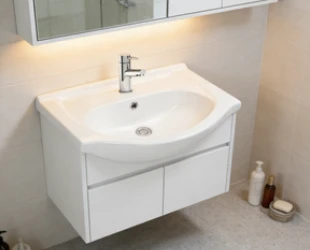
From the sleek basins to the diversely shaped toilets in the bathroom, sanitary ceramics may seem ordinary, but they are actually a sophisticated craft that integrates physics, chemistry, and mechanical processes. A qualified sanitary ceramic product has to go through multiple rounds of refinement in various procedures; even a tiny deviation in any link could render all previous efforts futile. This time-honored yet modern craft has always defined the quality of life with millimeter-level precision.
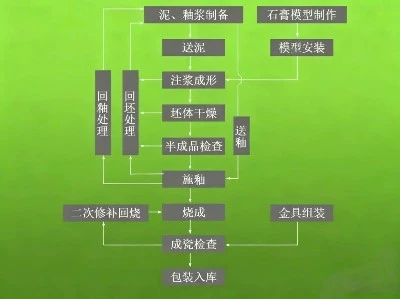
(Schematic Diagram of Sanitary Ceramics Production Process)
The "genes" of sanitary ceramics lie in its raw materials. Silico-aluminous clays, with kaolin, quartz, and feldspar as the core components, combined with auxiliary materials such as talc and metal oxides, form the basic texture of sanitary ware. However, transforming raw "clay" into usable "mud" requires overcoming a series of hurdles: first, inspecting, screening, and washing to remove impurities; then crushing, sieving, and iron removal to refine the particle size; finally, dewatering, aging, and kneading to ensure the mud's moisture content and toughness meet the forming standards.
In ancient times, mud preparation relied on animal power and manual labor, which was labor-intensive and inefficient. Today, equipment such as crushers and ball mills processes raw materials into three forms-clay strips, slurry, and powder-each tailored for different forming techniques and kept "on standby" for production needs.
If raw materials are the "flesh and blood" of sanitary ceramics, molds are their "skeleton". Traditional craftsmanship mainly uses gypsum molds: first, a product prototype, known as the master mold, is made according to design drawings; then split and reproduced into production molds for mass use, also called male molds and female molds. Flat sanitary ware produced by roller forming is shaped by the cooperation of male/female molds and roller heads; complex sanitary ware made by slip casting is formed by assembling multiple mold pieces. High-quality gypsum molds boast extreme precision, even eliminating the need for trimming the formed clay blanks. Modern pressure forming technology has adopted polished steel molds, further improving the uniformity of products.
The transformation from mud to blank is an art of "shaping". Ancient craftsmen shaped sanitary ware through pinching, wheel-throwing, and manual throwing. Today, mechanical processes like roller forming, slip casting, and pressure forming have enabled mass production. Nevertheless, manual throwing and sculpting still retain their artistic warmth in high-end custom-made products.
Formed clay blanks are not directly sent to the kiln; they undergo "finishing processes" including bonding, trimming, and glazing. Trimming removes excess clay and smooths the edges-high-grade ceramics even require wet vibration polishing. Minor adjustments before glazing directly determine the final luster and texture of the product.
After drying, the clay blanks are coated with a layer of "glaze". Glazing methods vary by product type: brushing, dipping, and pouring are suitable for small-batch production or special-shaped products, while spraying is preferred for large-scale manufacturing. If the blanks have been pre-fired (a process that makes them non-absorbent), heated spraying is used to ensure an even glaze layer. This is a process where "a tiny error leads to a huge discrepancy": an overly thick glaze layer causes dripping, while an overly thin one exposes the blank, turning the product into a defective item with just a slight mistake.
Firing is the "coming-of-age ceremony" for sanitary ceramics. Changes in flame, temperature, and atmosphere trigger physical and chemical reactions in the kiln, ultimately sintering the clay blanks into porcelain. Depending on regional conditions and fuel types, firing is carried out in two atmospheres: oxidizing flame (with sufficient oxygen) and reducing flame (with insufficient oxygen). Every step-loading the kiln, firing, and unloading-tests the craftsman's experience. In ancient times, kiln loaders were among the most valued workers in the kiln factory.
Once the porcelain is taken out of the kiln, the final packaging process serves as both a quality inspection checkpoint and a protective shield. Workers select each finished product one by one before packing and boxing them, ensuring that these sanitary ware pieces, which have gone through dozens of procedures, reach the nooks and crannies of people's lives in perfect condition.
From clay to sanitary ware, the production of sanitary ceramics is like a precise "relay race", where each step builds on the efforts of the previous one. With the support of modern high-tech production, even errors as small as one part per million are strictly prevented. The cleanliness and refinement of these bathroom essentials are the best testament to exquisite craftsmanship and dedicated ingenuity.