

As one of the most important inventions in human civilization, the toilet's evolution reflects the trajectory of social progress and technological innovation. From simple urinals in ancient times to modern, intelligent sanitary devices, toilets not only fulfill basic physiological needs but also become a crucial indicator of quality of life and public health.
Throughout history, the toilet's form has undergone significant changes. Archaeological evidence shows that flushing toilets existed as early as 2000 BC in the Indus Valley Civilization. Public toilet systems constructed during the Roman era utilized complex underground drainage networks to manage collective hygiene. The "chamber pot culture" of medieval Europe reflected the limitations of hygienic concepts. It wasn't until the 16th century, during the reign of Queen Elizabeth I of England, that Sir John Harrington invented the first prototype of a flushing toilet, marking the beginning of the modern toilet's development.
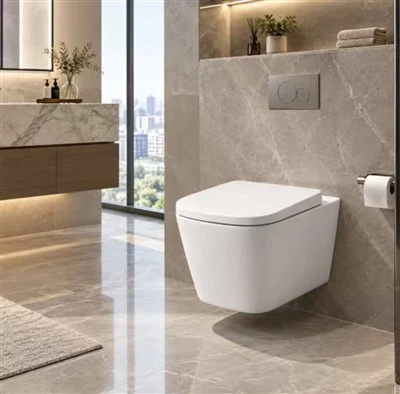
Contemporary toilet technology has become a comprehensive scientific discipline. Siphonic and washdown flushing principles each offer their own advantages. The siphonic flushing principle is known for its quietness and odor-reducing properties, while the washdown flushing principle is popular for its powerful flushing effect. Continuous breakthroughs in water-saving technologies, such as dual-flush designs and tankless toilets, have reduced water consumption per use from the traditional 9-12 liters to 3-6 liters. The rise of smart toilets has taken comfort to new heights. Integrating functions like seat heating, warm water washing, and warm air drying, combined with antibacterial materials and air purification systems, they redefine the health standards of bathroom spaces.
From a public health perspective, the widespread use of toilets has profoundly impacted the progress of human civilization. According to the World Health Organization, approximately 2 billion people worldwide still lack access to basic sanitation, resulting in infectious diseases that kill nearly one million children annually. The United Nations Sustainable Development Goals specifically list "access to adequate and equitable sanitation and hygiene for all" as a key indicator. In modern urban planning, the rational layout of toilet systems and sewage treatment capacity are directly linked to residents' quality of life and environmental protection.
In the future, toilet technology will continue to evolve towards smarter and more environmentally friendly features. The application of the Internet of Things will enable the monitoring and analysis of usage data, the development of biodegradable materials will help reduce environmental burdens, and more efficient water-saving technologies will address the challenge of global water scarcity. This daily utensil, which carries the most basic needs of human beings, continues to write a new chapter in the progress of human civilization.
The toilet: A vital vehicle for modern hygiene and civilization.
Popular Products




Send Inquiry